Maritime Connection Technology: VOSS coat Protects Components in Offshore Use
Maritime Connection Technology: VOSS coat Protects Components in Offshore Use
Saltwater and moisture place the highest demands on hydraulic components in the offshore industry. Manufacturers of ship, mobile harbor, and offshore cranes benefit from the VOSS coat coating: As a cost‑effective alternative to stainless steel, it combines high corrosion protection with maximum operational safety.
Every fitting counts: Corrosion as a critical factor
In maritime environments, hydraulic components must operate reliably under extreme conditions: In addition to moist and salty air, fluctuating temperatures and mechanical loads put the components to the test. Without sufficient protection, material fatigue and corrosion quickly lead to increased maintenance requirements and unplanned downtime. There is also a safety risk: Leaks or component failures can impair operational safety. Especially for offshore cranes or mobile harbor equipment, even a single defective fitting can have serious consequences.
Manufacturers typically offer support throughout the entire product life cycle. Accordingly, the requirements for suppliers are high. Maintenance work on components in hard‑to‑reach machinery at sea generally leads to downtime and high associated costs. What is needed are components that operate reliably, with low maintenance needs and high safety – over the long term.
Steel instead of stainless steel: VOSS coat makes the difference
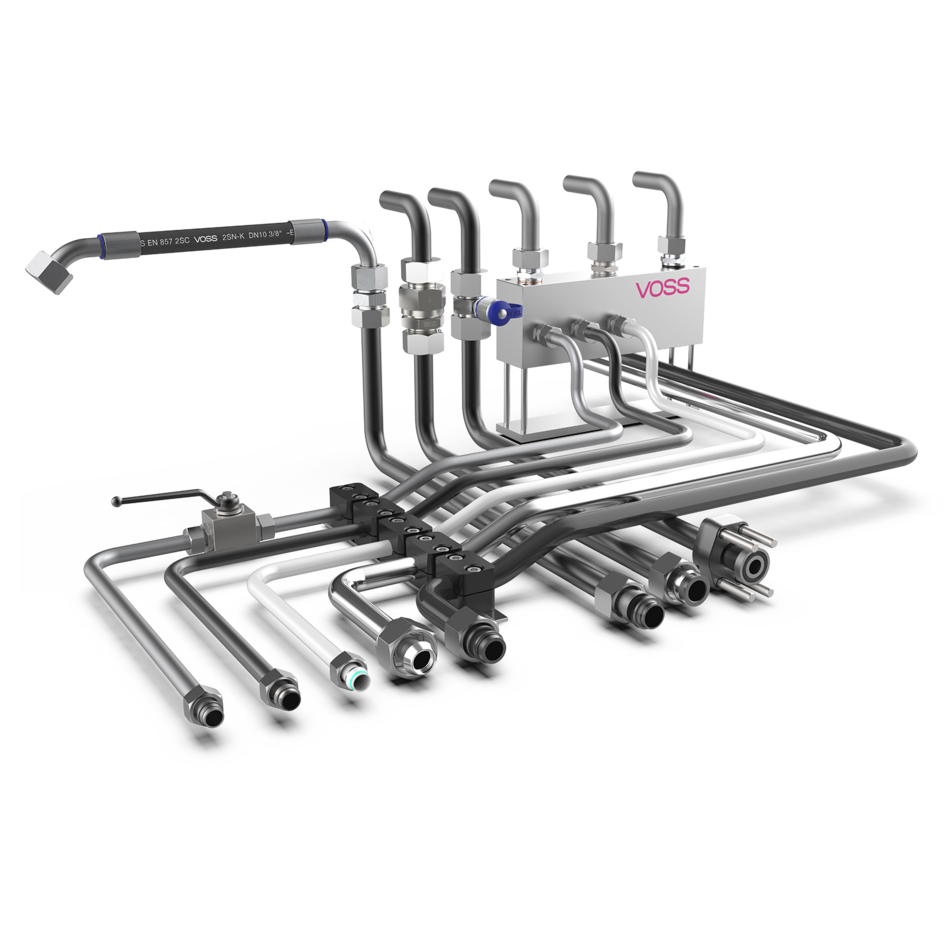
A typical application area for VOSS connection technology is offshore cranes. The reliability of fittings, hydraulic valves, and prefabricated pipe assemblies depends heavily on the choice between steel and stainless steel.
Stainless steel is primarily used where components are in permanent, direct contact with saltwater, as its high chromium content improves corrosion resistance. However, stainless steel is significantly more expensive and is therefore only used when no alternative is available.
Steel, on the other hand, offers higher strength at the same weight, making it ideal for structural applications. However, due to its susceptibility to rust, steel is usually used only in areas with low environmental exposure – such as in hydraulic systems below deck.
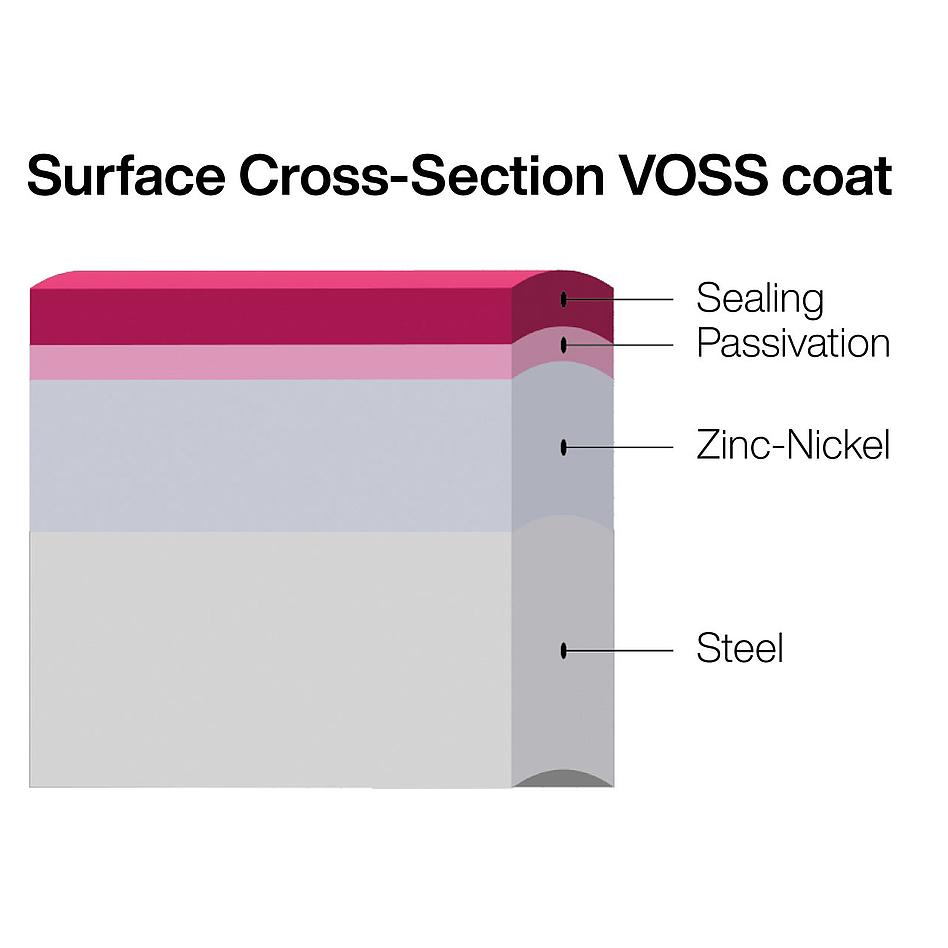
This is where VOSS coat comes in. The coating technology for steel components, developed and continuously improved over decades, is based on a zinc‑nickel alloy. This combination delivers exceptionally high corrosion resistance, far exceeding that of conventional zinc coatings, and protects components from red and white rust. An additional sealant prevents oxidation and extends the service life of the components. Even under aggressive conditions, such as short‑term contact with saltwater or saline solutions, the surface remains intact and the components remain fully functional.
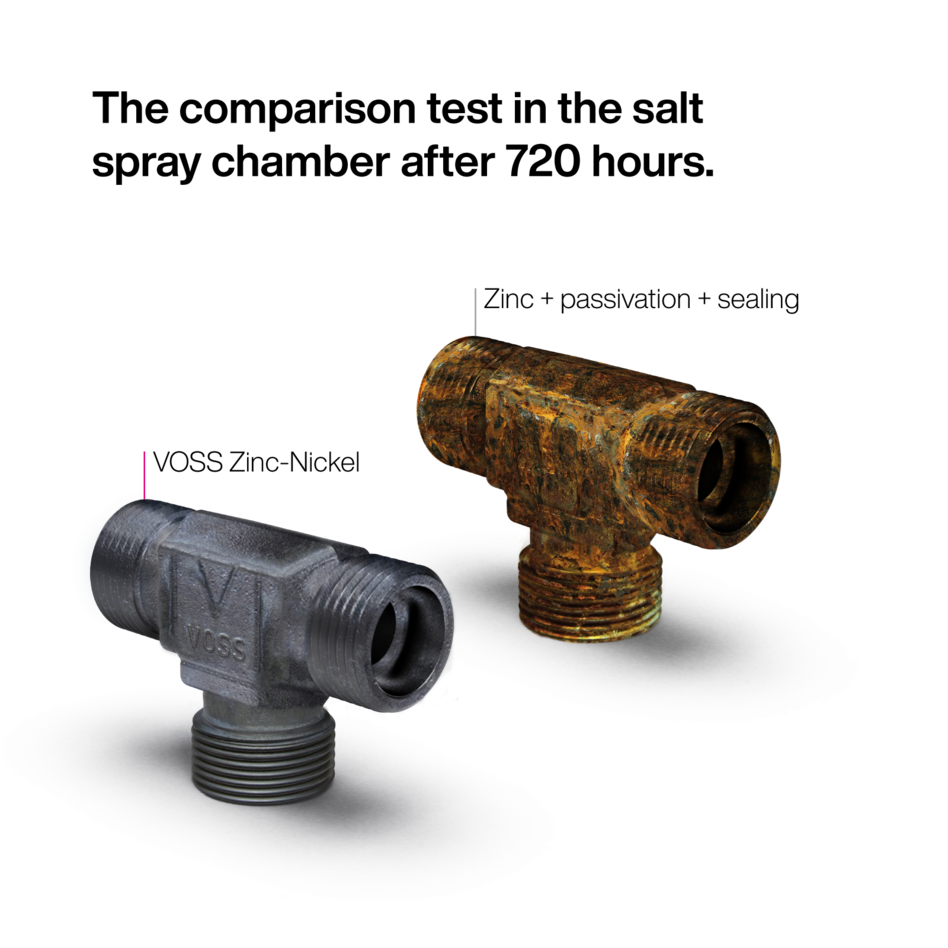
Salt spray tests according to DIN EN ISO 9227 show that VOSS coat provides better corrosion protection than conventional zinc coatings. In practical, assembled conditions, components with VOSS surface coating withstand up to 1,000 hours before the first signs of rust appear. At the same time, VOSS coat–coated components retain the advantages of steel: higher strength at the same weight and significantly lower cost. Using steel components with VOSS coat enables cost savings of up to 90%.
System solutions for maximum operational safety
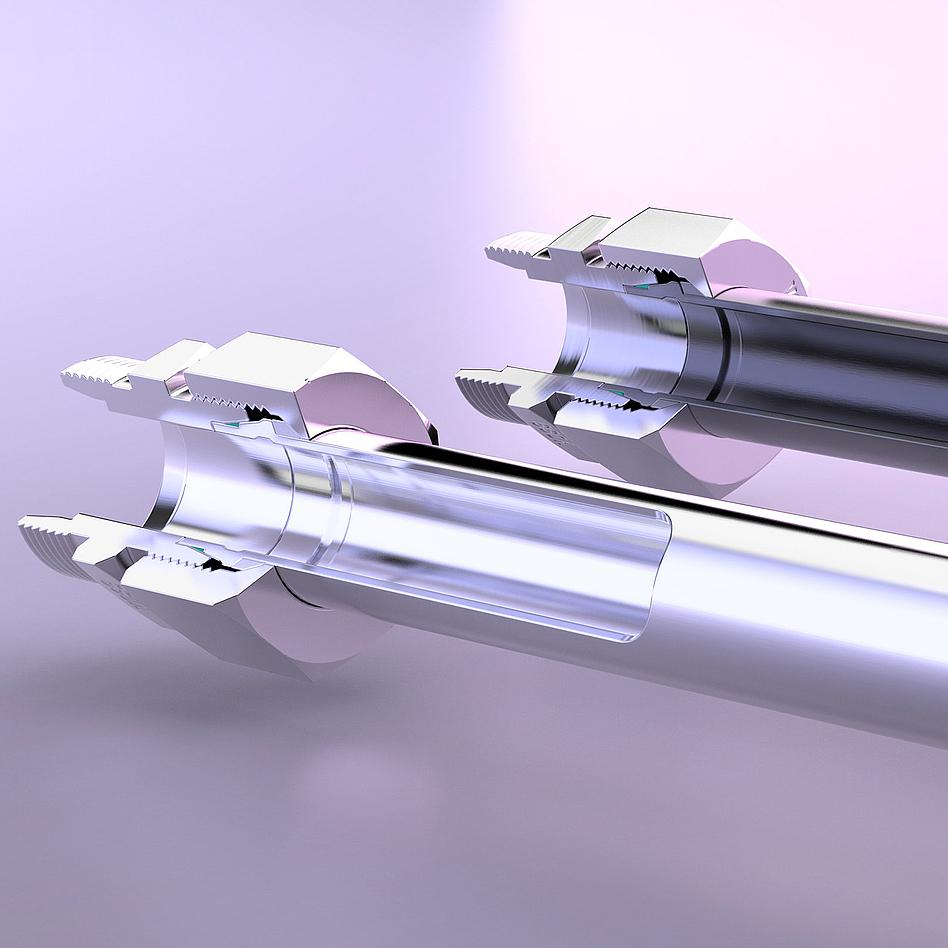
In addition to surface coating, other VOSS system solutions are also used in the offshore sector. A typical example is VOSS Form SQR – a tube forming system for hydraulic lines made of steel and stainless steel. It ensures leak‑tightness through a metallic seal with an additional FKM soft seal. This effectively diverts high dynamic loads, such as vibrations or sudden load changes, away from the connection area. Simple installation and easy handling significantly reduce rework and maintenance intervals—an essential advantage in light of the growing shortage of skilled workers.
Conclusion: Efficiency and safety in harmony
With VOSS coat and intelligent connection systems, VOSS provides the maritime industry with solutions that combine economic efficiency, safety, and sustainability. Reduced downtime, minimal maintenance effort, and lower material consumption not only decrease operating costs but also reduce the CO₂ footprint.
Fewer failures mean greater safety for offshore projects. VOSS coat proves that durability does not have to be achieved through expensive stainless‑steel components – advanced coating technology pays off in the long run.